

I go to a lot of events.
Pitch competitions. Investor conferences. Alumni mixers. Award nights. I meet entrepreneurs, community leaders, and business leaders. And often times, I’m the keynote speaker coming off the stage, with lots of people wanting to chat it up.
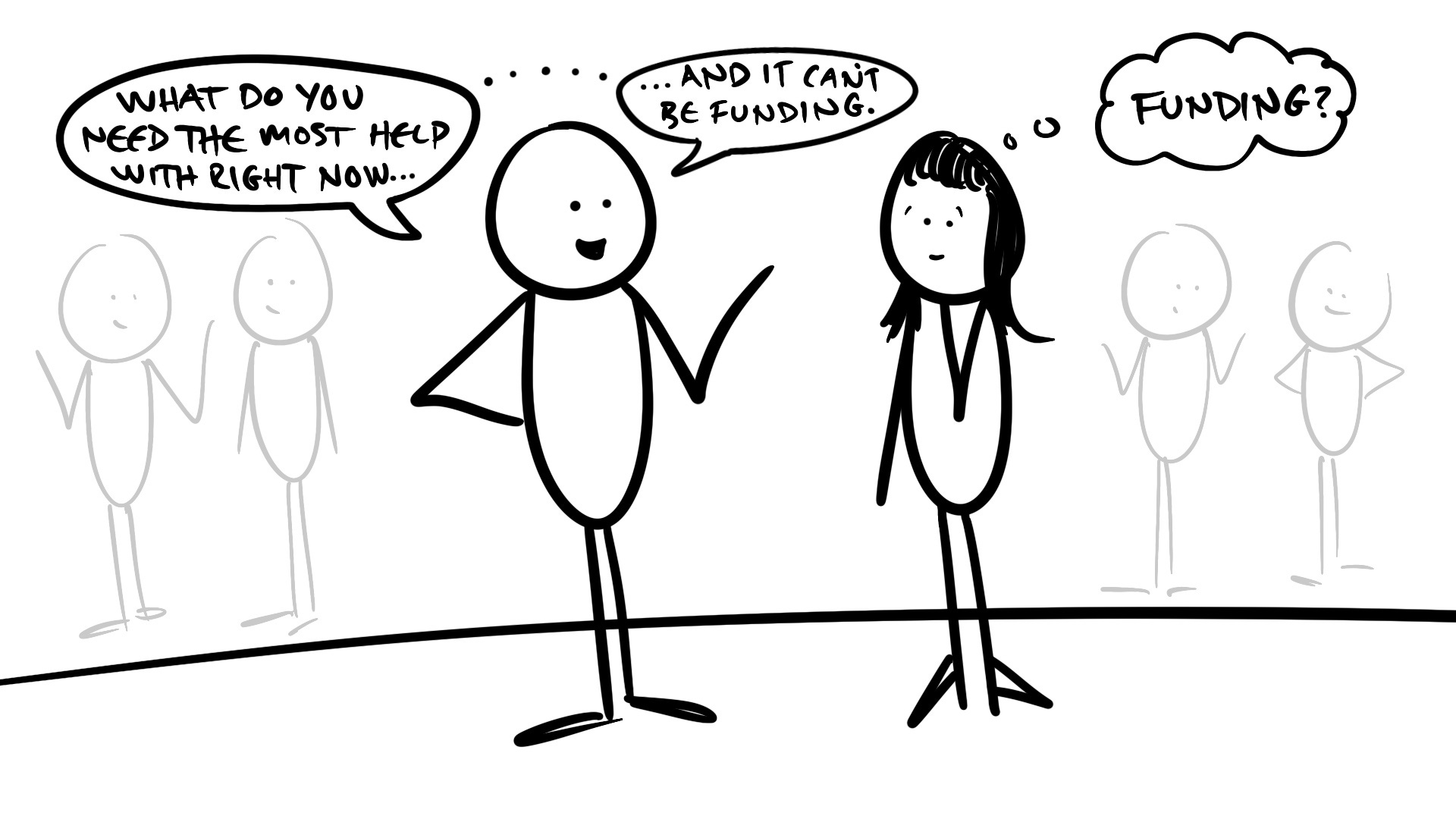
And at almost every event, I find a moment to ask my favorite question.
What is the thing you need the most help with right now?
If I’m talking to an entrepreneur, I time it right, and then I add one more line.
And it can’t be funding.
Because nine times out of ten, that’s the answer I used to get. Funding.
Take funding off the table, and something interesting happens.
They don’t know what to say.
General Answers Get General Help
When people get stuck, they default to something broad. “I need more customers.” “I need to grow.” “I’m looking to connect with anyone here.”
That answer is safe. It’s also useless. Not because it’s wrong, but because I can’t do anything with it.
Think about word of mouth. It’s the cheapest, most trusted way to grow anything. It closes deals before you even show up. Someone says, “Oh my God, you have to meet Ryan, he’ll help you with exactly this,” and half the work is already done.
But word of mouth only works if people know exactly who to send your way.
I learned how true this is while giving a keynote at a sales kickoff for a massive company in Texas. The room was full of their top salespeople. The most successful in the company. During my talk, I asked one of them, “Who is the ideal person you want to connect with?”
The answer was super general.
I said, “Okay. Based on that, I can’t think of a single person in my network. Can you be more specific?”
They got a little more specific.
“I need more.”
More specific.
“More.”
And more. And more. Until they were describing someone so particular that suddenly, two real people popped into my head. People I could actually introduce them to.
That’s the moment. Specific, specific, specific. The more specific you get, the more people can help you.
What the Research Says
This isn’t just me being picky at networking events.
Stanford professor Frank Flynn and his colleagues found that people tend to overestimate how likely it is that others will turn down a direct request for help. In other words, people are much more willing to help than we assume, particularly when the ask is fairly small.
So the problem usually isn’t that people won’t help. It’s that we never give them something clear enough to help with.
Vague requests actually push people away. When you’re cagey or fuzzy about what you’re asking for, the other person can get defensive or uneasy about what they’d be signing up for.
And asking “anyone” is the same as asking no one. In one study by researchers Yechiam and Barron, only 6% of people on an email list clicked a survey request, compared to nearly 17% of people who were contacted individually. When a request is aimed at everybody, everybody assumes someone else will handle it.
The Genie Rule
Here’s how I frame it.
You’ve got a genie in a bottle and one wish left. You get to wish for the one thing you need the most help with right now.
It can’t be funding.
What is it?
That’s hard, right?!
I’ll admit it, I struggle to answer it too. We all do. We think we need help in general. More time in the day. More money. More everything.
But the specificity with which you can explain what you need directly correlates with the chances that someone can help you.
And it has to be one thing.
If you tell someone you need help with three things, you’ve just made it three times harder for them. Their brain has to juggle. But if you say, “I need help with this one particular thing,” they can start flipping through their own mental Rolodex. Oh, I know someone for that.
Your answer can change. It depends on the timing, the event, and the person in front of you. That’s fine. It just has to be one thing, in that moment.
Newsflash: Money Won’t Fix It
Funding is the default because it feels like it solves everything. Get the money, and the other problems go away.
They don’t.
Raising money doesn’t fix your culture. It doesn’t tell you which product experiment to run. It doesn’t give you expertise in a niche or put you in front of the right person at the right time.
Those are the real needs. And usually, one of them is the thing actually holding you back.
Mentorship Is Not an Answer
I was at a fancy dinner the other night, seated next to someone I’d never met. We got talking, and I asked her the question.
She said she needed mentorship.
“What does mentorship mean to you?”
She explained she was building an app and wanted feedback on it.
“That sounds more like customer feedback,” I said. “That’s not really mentorship. So what do you need from a mentor?”
She kept explaining. I kept asking. And after a good bit of back and forth, we narrowed it down to a specific type of person who could move a specific needle for her. And that allowed me to think about specific people in my network to connect her with.
It was only through that conversation that she helped me figure out how I could help her.
Nobody Is Going to Ask You
Here’s the kicker.
Nobody asks this question. Seriously. I’ve been doing it for years, and I’m the only one I know who does.
Ask it enough and you realize most people don’t have an answer ready. And when you’re put on the spot without one, you stumble or you go general. Because general feels safe.
“I’m just here to connect with anyone.”
No, you’re not. If you try to connect with everyone, you’ll connect with no one. It’s physically impossible at a big event anyway. A ship that sets course for every port never leaves the harbor.
So choose fewer, better conversations. And be ready to make them count.
Set Your Heading Before You Walk In
Before your next pitch competition, alumni night, or investor event, take a moment.
As you walk through those doors, ask yourself: What is the one thing I need the most help with right now? And it can’t be funding.
Lock it in. Make it your North Star.
People won’t ask you. So bring it up yourself. “The thing I need the most help with right now is connecting with this type of person.” Or “getting feedback on this specific thing.”
The more specific you are, the more likely someone will think of a person, a tool, or a book that fits.
I keep a short list of books ready for exactly this reason.
The Payoff
A couple of weeks ago at the TiE investor conference, I ran into a founder I’d met a year earlier. We caught up, and right before we parted, I asked him what he needed the most help with.
He started to say “funding,” and I cut him off. “But it can’t be funding.”
We both laughed.
Then he got real. He said he felt like he was doing too many things at once, and not enough of them were getting done.
Now that was specific. And I knew exactly what to do with it.
I asked if he’d heard of the 80/20 principle. He hadn’t. So we talked about it for a few minutes, and I told him to read The 80/20 Principle.
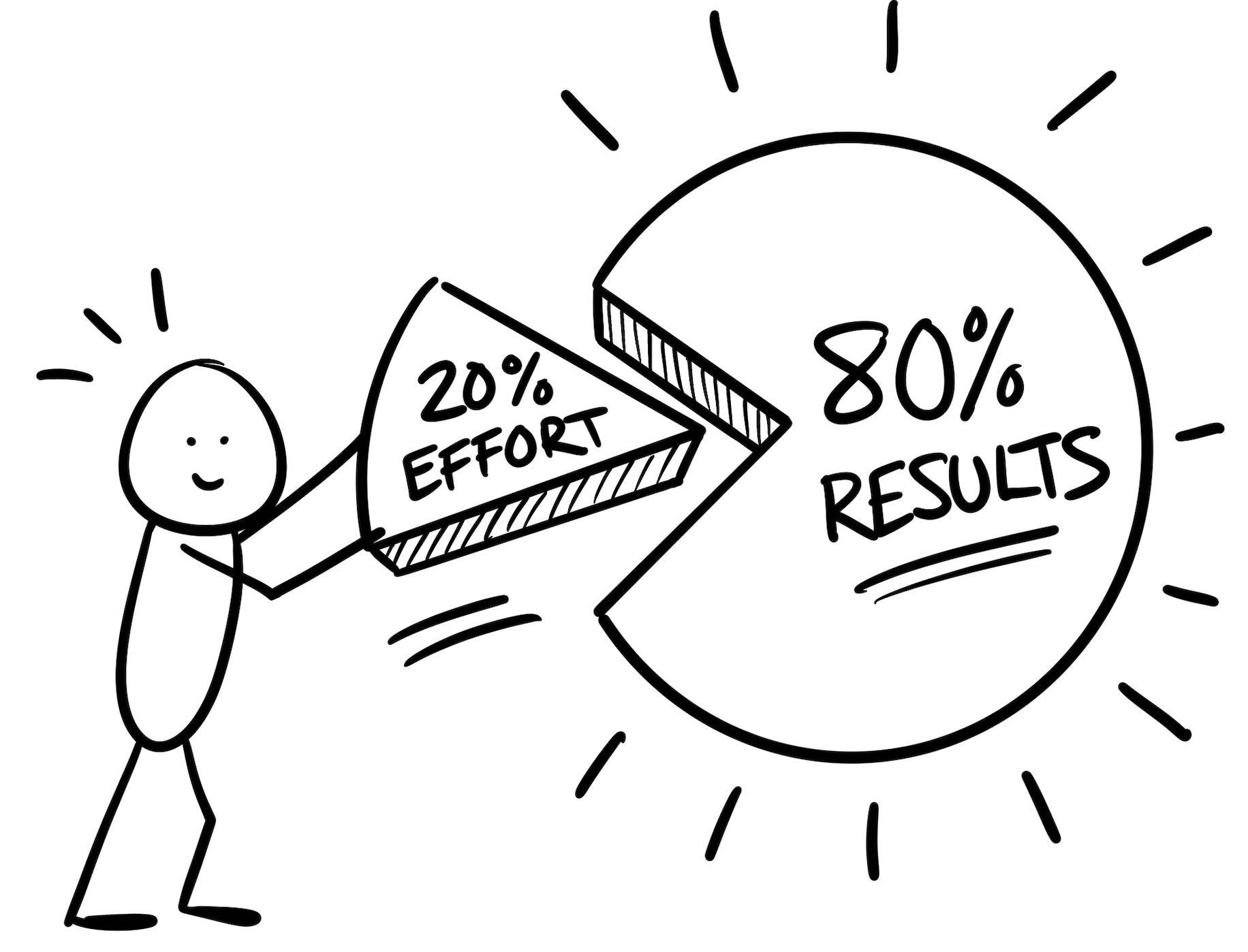
That book might be exactly what he needs. The information is already out there. He just had to name the problem clearly enough for someone to hand it to him.
That’s how this works. When you get clear on what you need, the world starts delivering it.
Your One Wish
So decide before your next event. One thing. Not funding. Share it in detail. Do that a few times in one room, and I’m pretty sure you’ll find your next step.
And if you see me there, don’t worry.
I’ll ask.