

For over a decade, I’ve worked with thousands of entrepreneurs, from high school summer programs to college classes to accelerators, and one on one consulting with founders directly, and I kept running into the same wall.
Give someone a great idea and a short amount of time, and watch them completely lose people.
Early on I ran into this myself. I was pitching a solution I was genuinely excited about, at every event I could find, explaining exactly how great it was. And almost nobody leaned in.
That’s the real problem.
Founders need to explain their idea in a way that’s clear, memorable, and lands in whatever time they’re given, and most of the time, there isn’t much time to work with. That challenge doesn’t discriminate, it shows up the same way whether someone is pitching for the first time in a classroom or pitching investors for their third company.
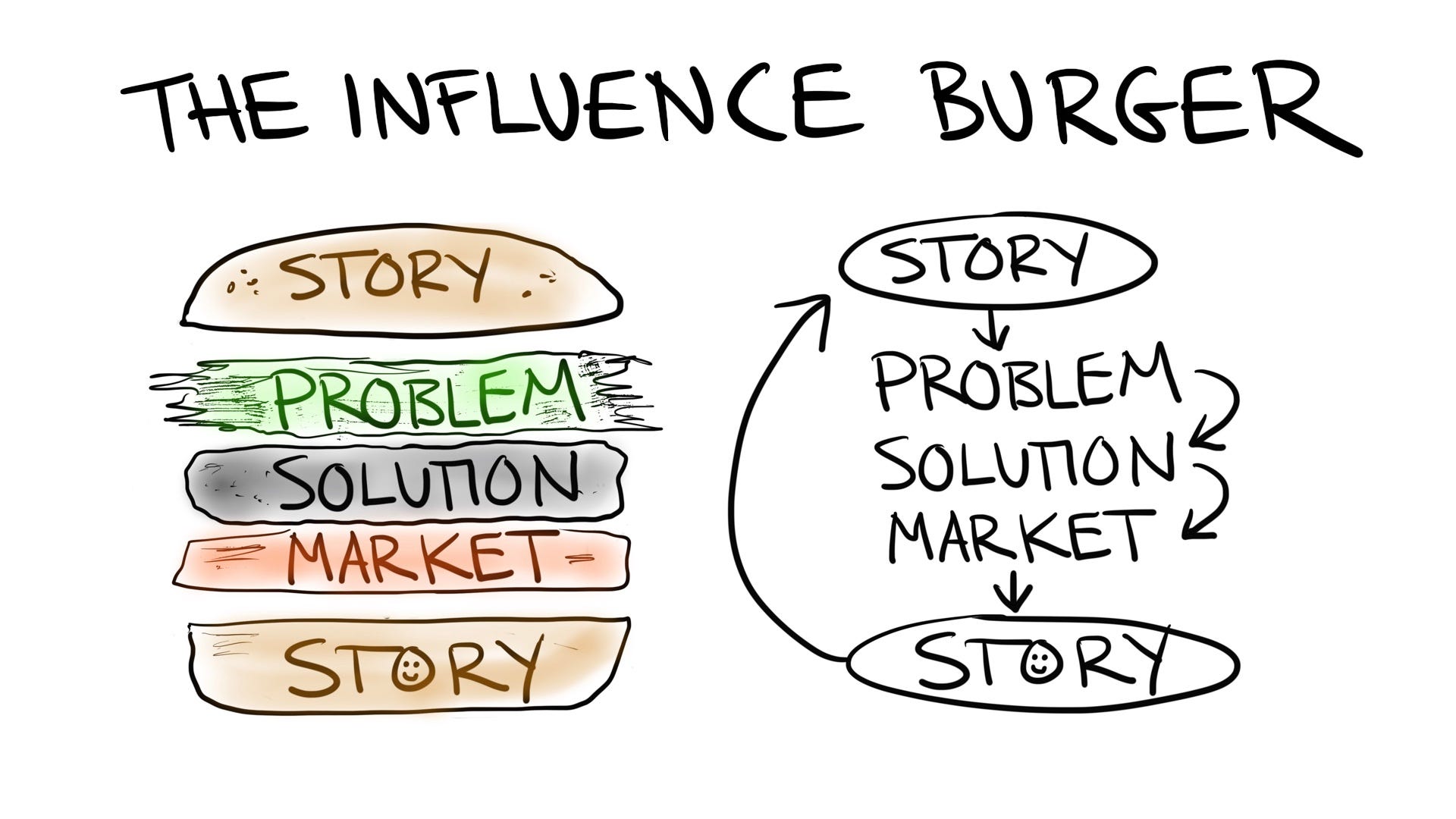
So I built a solution, a structure I call the Influence Burger. Story, problem, solution, market, then the same story again to close it out.
This isn’t for everyone.
It’s for founders trying to get their message across quickly and clearly, for entrepreneurs entering pitch competitions, and for those who want more influence.
Once people learn it, they genuinely don’t look at a burger the same way again.
The Story: Your Top Bun
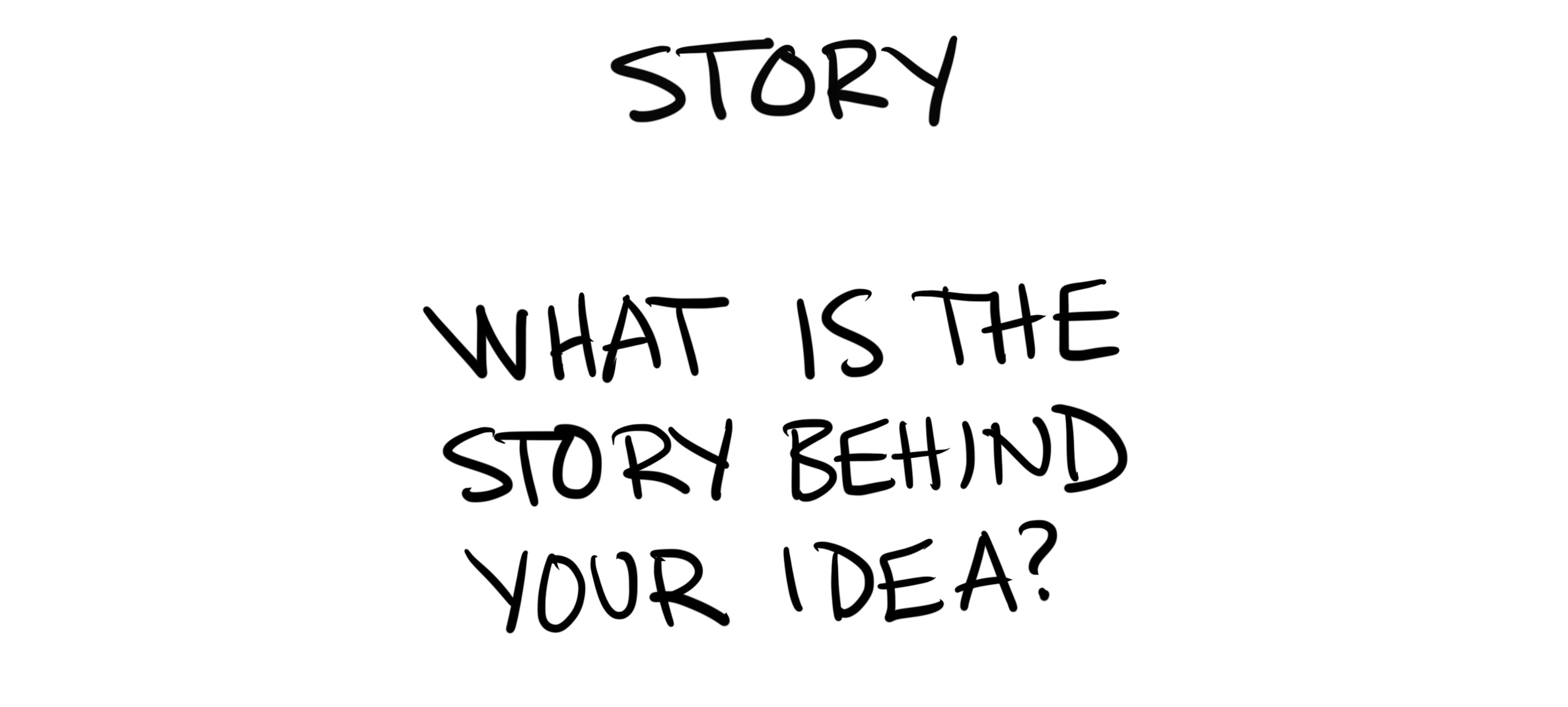
You start with story. It can be your own founder origin story, the moment you personally discovered the problem. It can be a real, documented story about someone else who lived the problem. It can be a friend’s story. Or it can be a hypothetical you construct for the presentation.
Whichever kind you choose, the story’s whole job is to uncover a problem, not hint at your solution, just the problem. It should land on a line like, and that wasn’t just a problem for Jane, that’s a problem for millions of people. That line is the hinge, it turns one person’s experience into a real, shared problem.
Never open with your name, your company name, or a tagline. That’s a wasted opening. Before anyone can actually absorb information, their brain has to decide you’re not a threat, and walking in with your name and a slogan can register the same way facts and figures do, as pressure, not connection.
I go deep on this in my TEDx talk called How to Not Get Chased by a Bear, about how we react to external threats and how that shapes what we’re able to hear. A story sidesteps that entirely, it signals safety, and that’s what earns you the room’s attention for what comes next.
The Problem

Now you build the case for the problem itself, and only the problem, no solution yet.
People don’t actually care what you do, they care about the problem you solve, and I go into that in another TEDx of mine called Why No One Cares What You Do. Nobody asks about the problem first, they ask what you do, so founders get very good at explaining solutions and never practice explaining problems.
That’s backwards. Lead with your idea and people instantly compare it to five things they’ve already heard. Lead with the problem and get someone to genuinely agree it’s real, and they’re leaning in before you’ve said a word about what you’ve built.
The Solution

Once someone believes the problem is real, your solution just has to solve that specific problem. This is where you make the direct connection, this fixes that, clearly and plainly.
The Market
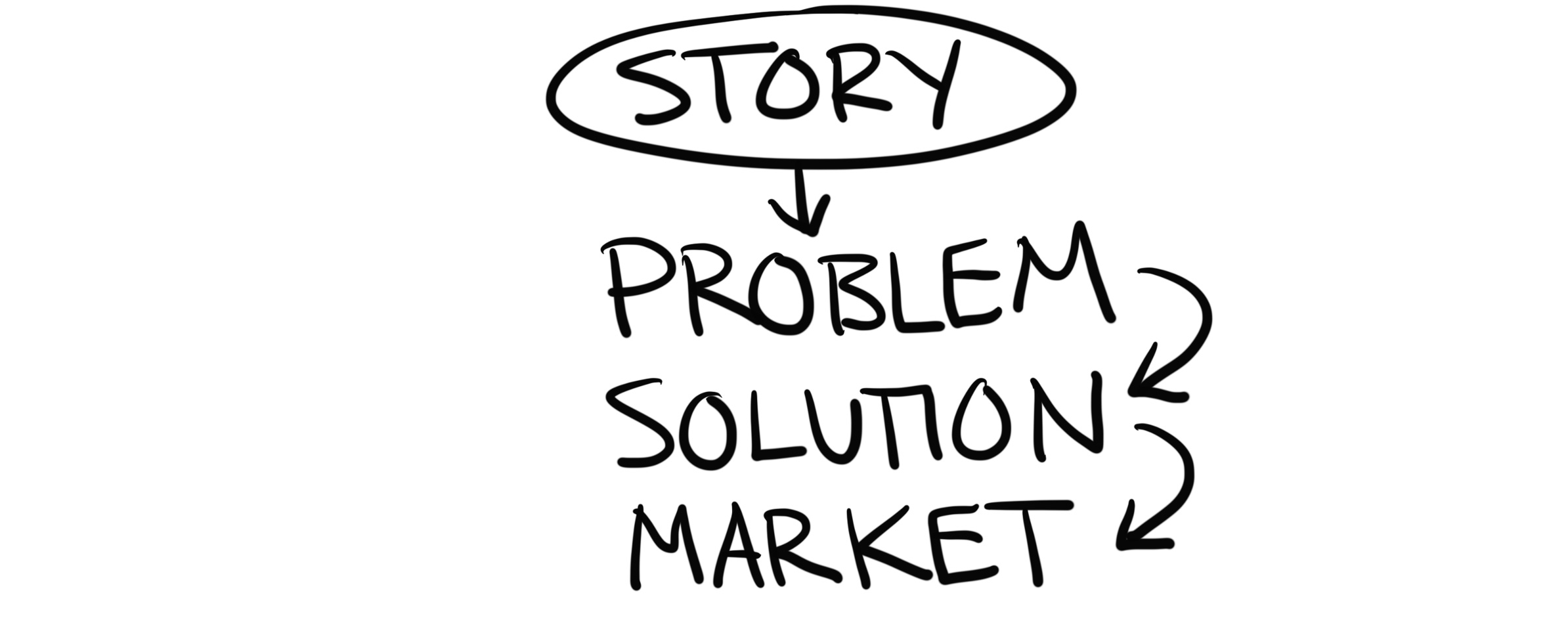
Then comes market, and here you narrow instead of expanding.
Most founders don’t actually know who their market is yet, so they hedge, we’ll capture one percent of this huge space, or worse, this is for everyone. That’s usually a sign the research hasn’t been done.
Skip the giant total addressable number and name your beachhead, the specific people you know you can win first. Say plainly, this is not for everyone, then say exactly who it is for.
Specificity here does double duty, it shows real product market fit, and it reinforces that you actually understand the problem you just spent two minutes building a case for.
The Story Again: Your Bottom Bun
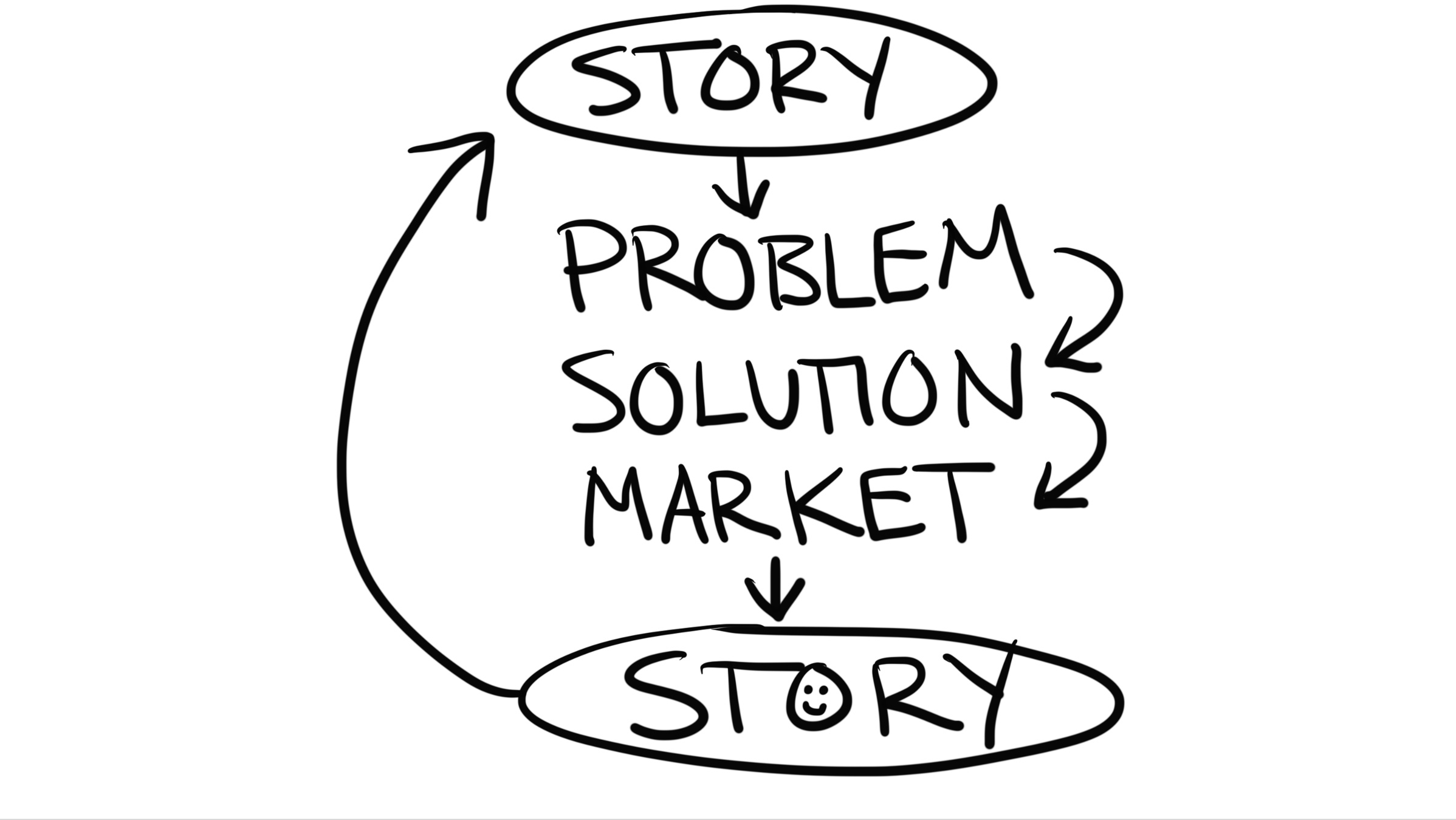
Then you close the loop. Return to the exact story you opened with, Jane, now living with the solution in place, or picture the world once this idea exists.
This is why starting and ending with story matters so much, there’s a well documented finding in memory research called the serial position effect, people remember what comes first and what comes last far better than anything in the middle.
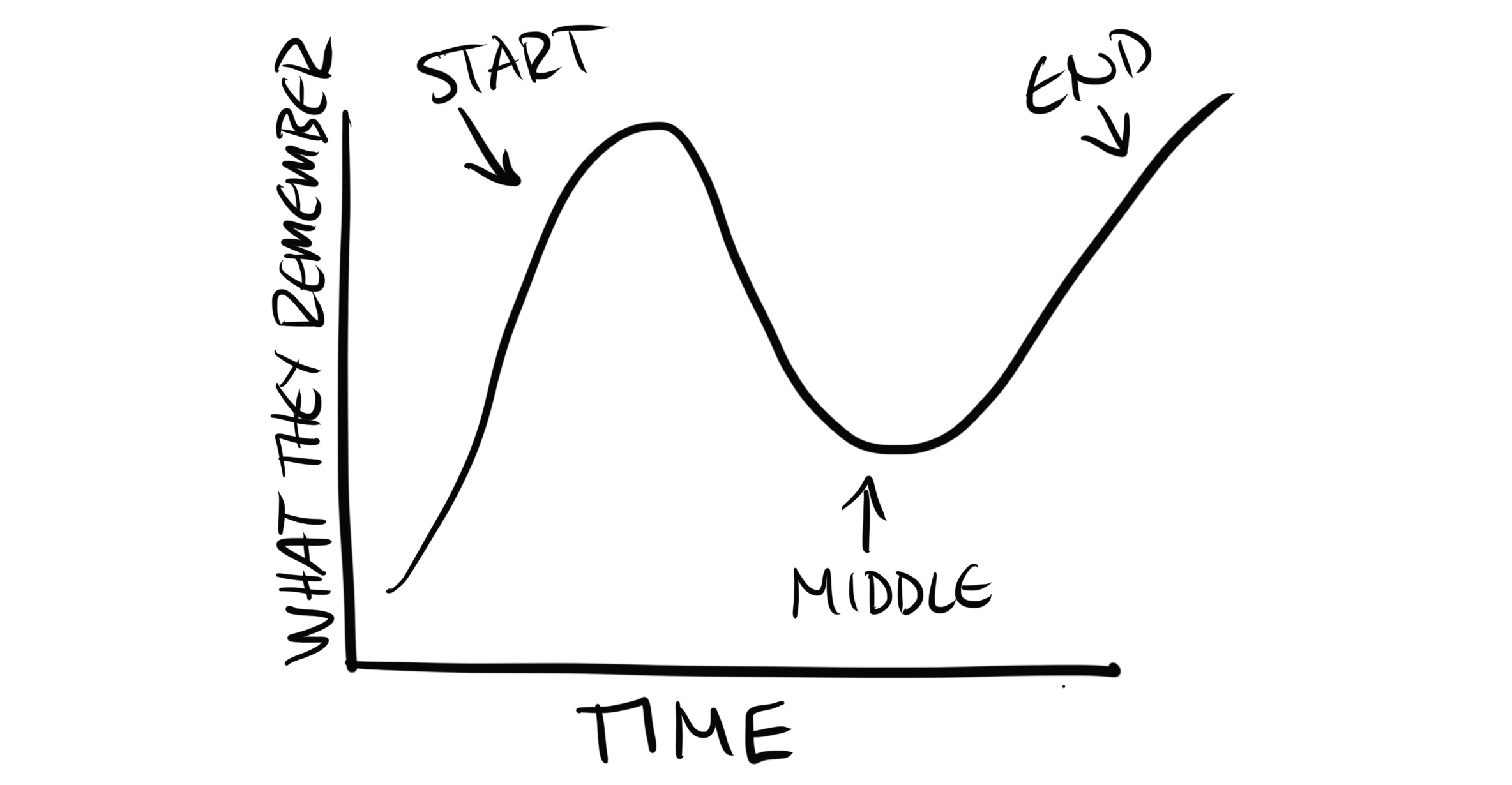
Bookend with the same story and you give people something they’ll actually remember and repeat once your pitch is over, which is the whole point.
Remember, your pitch is never going to fit everything about your business, and it shouldn’t. It should give people just enough to want more.
A Note on Slides
Robert Kiyosaki’s ten twenty thirty rule is a good starting point, ten slides, under twenty minutes, thirty point font minimum, and it offers a menu of slide types you can pull from. Include some, include all, include none, that part is entirely up to you.
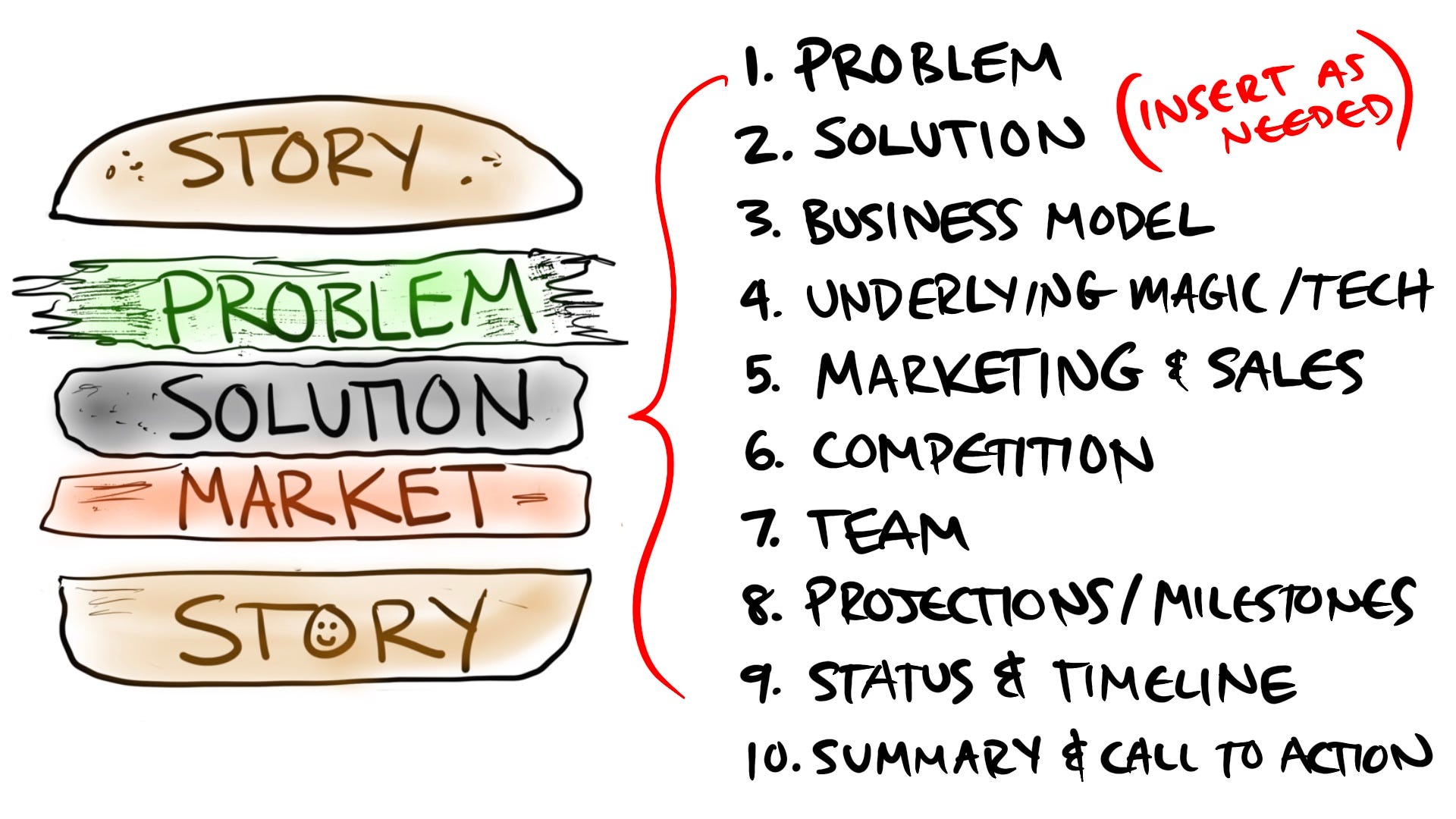
But whatever you choose, those slides go into the Influence Burger, not the other way around. The framework doesn’t bend to fit a slide count, the slides fit into the framework.
Here’s the other thing about slides, you might not need any. If you can hold someone’s attention and deliver a compelling pitch that runs a couple of minutes, slides can actually get in the way.
This is where the Influence Burger really pays off. I see founders panic constantly trying to memorize their deck word for word. With this framework, there’s nothing to memorize.
There’s a story, the story uncovers a problem, you talk about the problem, you share your solution, you clarify the market, and you tell the story again.
Anything else you want to include just lives inside one of those middle three sections.
And the framework scales with you. Think of it as an extra small, a medium, or a large Influence Burger, same five layers every time, story, problem, solution, market, story, just more or less inside each one depending on how much time you've got.
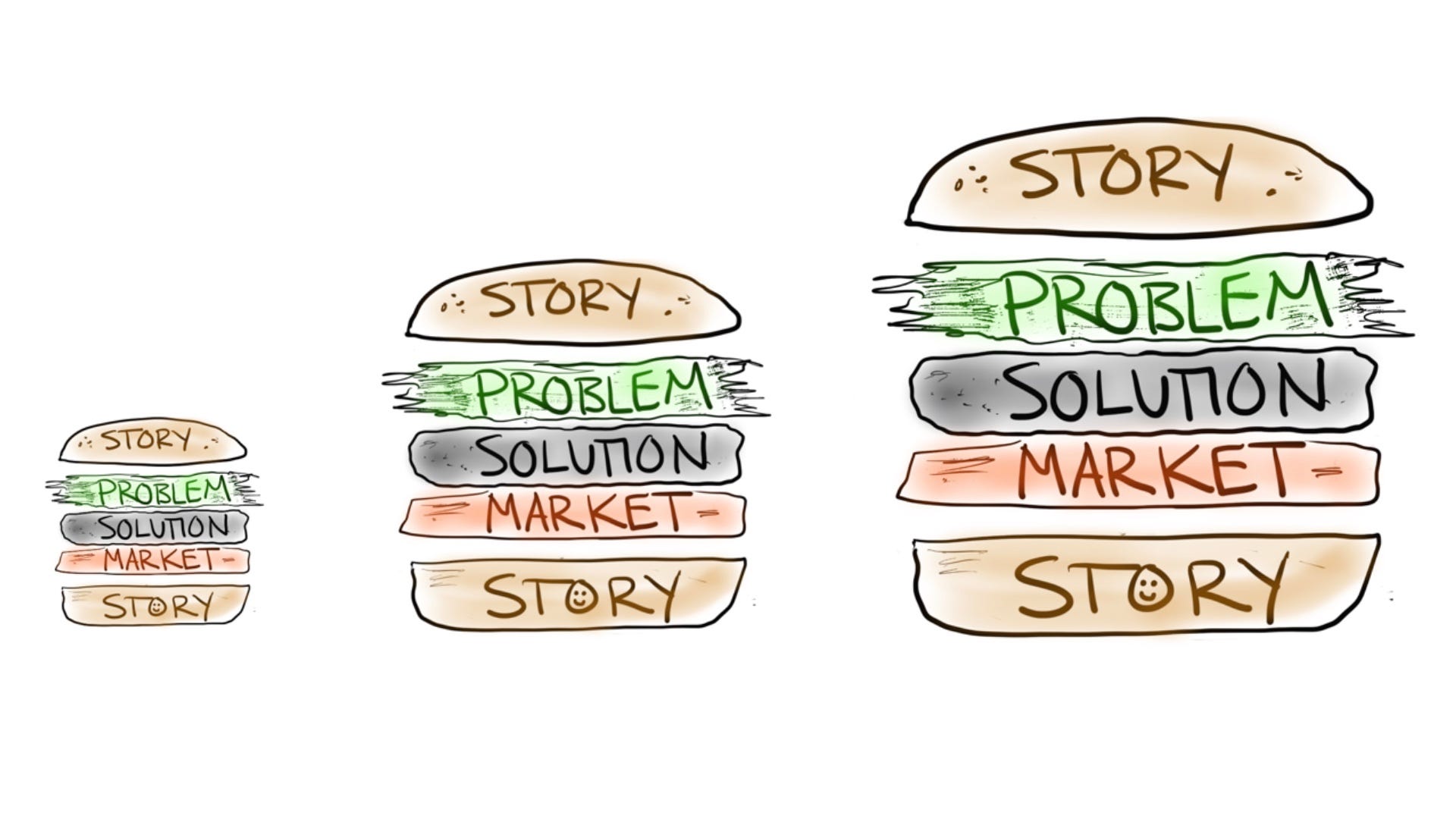
An extra small burger might be a single sentence per layer, perfect for a thirty second pitch. A medium gives you a sentence or two more room per section, good for a five minute pitch. And a large lets you stack in real depth, proof points, data, detail, for something closer to twenty minutes. You're never rebuilding the pitch, you're just resizing it.
At the end of the day, a pitch is just a story.
The better the story, the more clearly people can picture your idea actually existing in the world, and the more likely they are to carry it forward for you.