

We all have goals. Big ones, medium ones, small everyday ones.
We want the boat running, the book published, the deal closed, the brand built.
But here’s where most people go wrong. They fixate on the outcome and nothing else, and that is exactly the setup for failure and disappointment.
Because an outcome by itself is just a wish. What actually gets you there is something most people skip past entirely.
The Boat That Died Twice
Let me tell you about a boat.
This is my mom’s dinghy, a Caribe, a compact inflatable with a center console, the perfect size to sit on the back of her forty two foot Grand Banks.
Cyn and I were helping bring her over to Catalina for the summer.
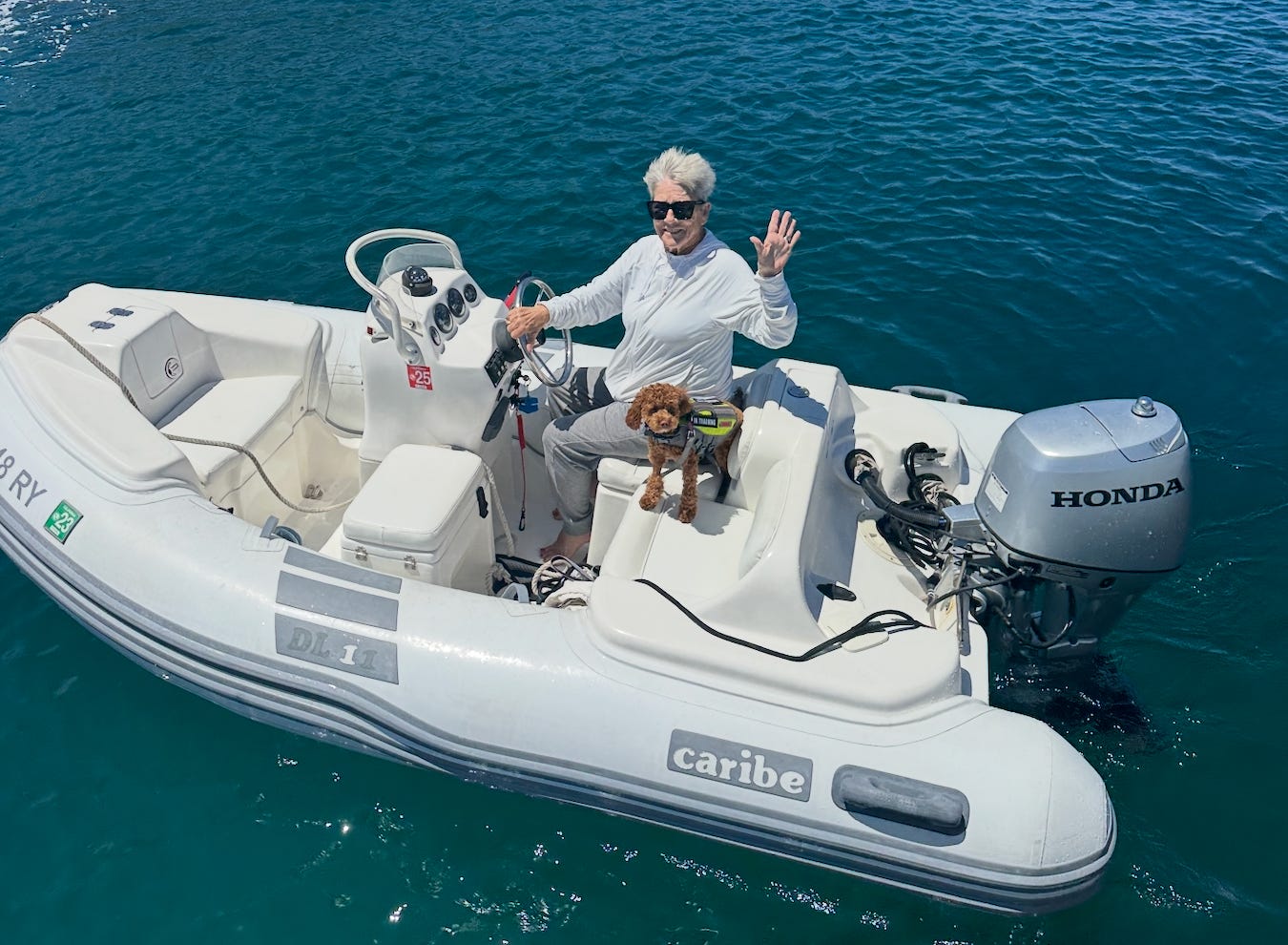
She’d be anchored at Big Geiger Cove with her dog Sadie, and this little boat was going to be her only way back and forth between the cove and Two Harbors.
I really wanted it running before we made the crossing.
I met Josh, my mechanic, at the launch ramp at eight thirty at night, the evening before we were supposed to leave. It was dark, and every bit of the plan was riding on this boat being ready in time. It looked like we were going to pull it off.
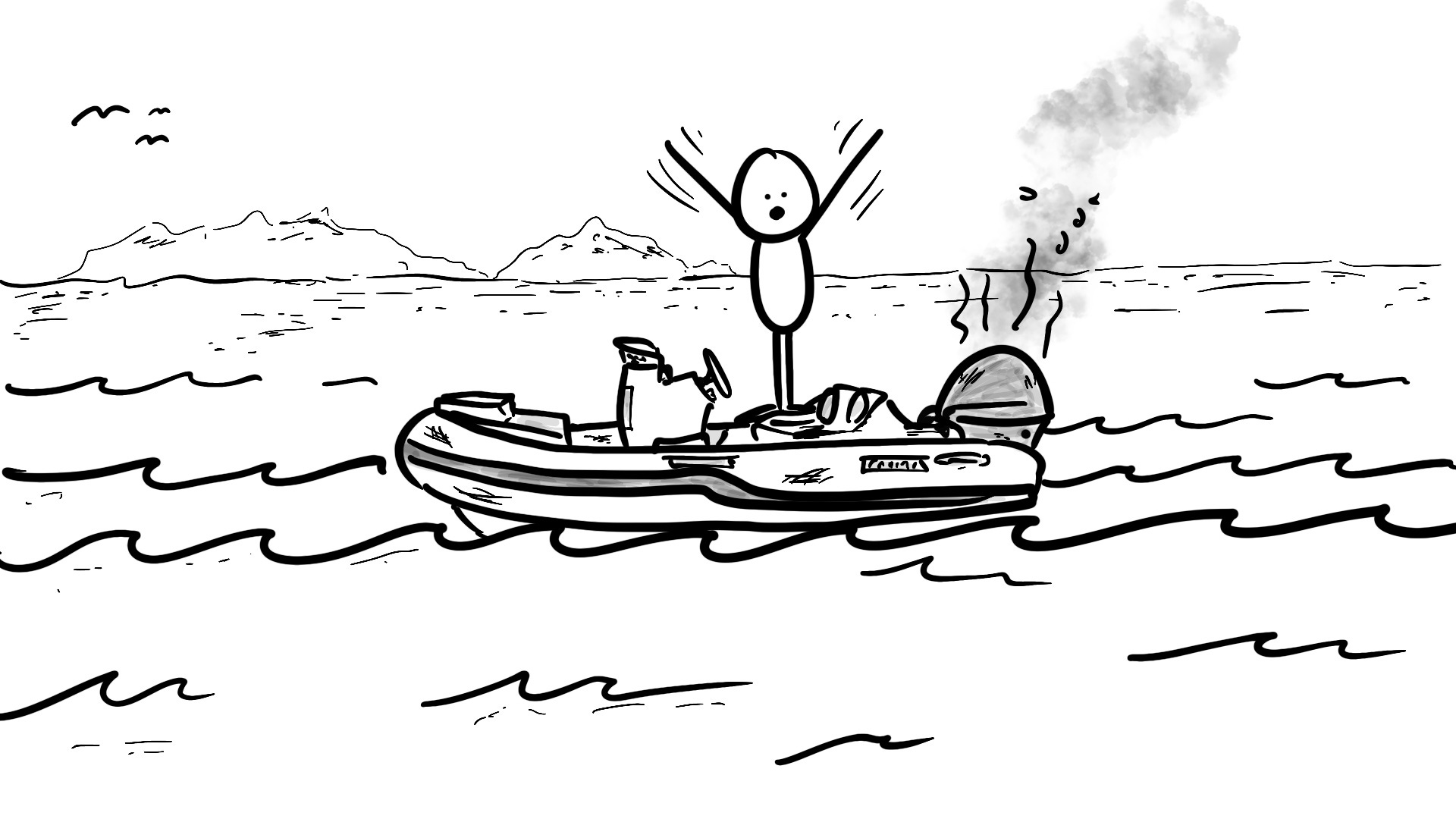
I took it out, and just around the corner on the way to our boat, an alarm screamed, a light lit up, and the engine died.
Lucky for me, the current carried me toward the docks, close enough to the launch ramp that I could get out and call Josh.
He came right down, and we started working the problem in the dark.
We looked at the warning lights, weren’t sure what we were dealing with, thought it might be the oil pressure sensor, found it, disengaged it, tried to replicate the failure. It didn’t happen again.
So we figured he could order the part, ship it to me in Catalina, and I’d install it there myself. We shook hands, I smiled, and headed home.
The boat died again on the way.
The tide carried me back toward the ramp, and I met Josh there again. I smiled, shook his hand, and said, can’t say we didn’t try.
We left the boat behind and headed to Catalina without it the next morning.
Why I Wasn’t Upset
Here’s the thing, I wasn’t upset. Frustrated, sure. But not defeated.
Because I had done my part.
I wanted the outcome, a working boat before the trip. But I couldn’t just want that into existence. All I actually had control over was the input, staying on top of the timeline, checking in with Josh regularly, being clear about the deadline, being available and easy to work with so he could prioritize me.
Whether the engine itself held together was never in my hands.
Whether I did everything I could to give it the best shot, that part was entirely mine.
The Three Types of Goals
This is what I teach my students at the ANTrepreneur Center, and what I work through with founders and people building their brands.
There are three types of goals.
Input Goals
Output Goals
Outcome Goals
Outcome goals are the destination, the thing you actually want.
Output goals are the visible progress that has to happen along the way, the parts replaced, the chapters drafted, the pitch delivered.
Input goals are the time and frequency you commit, the daily habit, the follow up call, the fifteen minutes you show up whether you feel like it or not.
And input is the only one of the three you actually control.
The Research Backs It Up
There’s real research behind this too. A sports psychology meta-analysis looking at goal setting found that process goals, which are essentially input goals, had a massive effect on performance, while outcome goals barely moved the needle at all.
Athletes who focus on execution rather than the scoreboard consistently perform better and burn out less.
This isn’t just true for boats or athletes, it holds for anything you’re building, a business, a book, a body of work.
When You Don’t Even Know the Outcome
Now here’s the part that surprises people. Sometimes you don’t actually know what the outcome is going to be, and the framework still works.
Years ago at a Tony Robbins event, he challenged the room to commit to something small for fifteen minutes a day.
I looked at my notes and saw I had doodled stick figures all over the margins, so that became my thing.
I committed to drawing a stick figure every day. Not a project, not a plan with an end date, just that one daily action.
I focused only on showing up for it each day, and looking back, that simple daily input turned into seven years straight.
I knew the output would be stick figures. I had no idea what the outcome would ever be, I was just answering a challenge.
Those stick figures eventually became the visual language of my speaking, they illustrate my books, they show up in every deck I build. None of that was the plan.
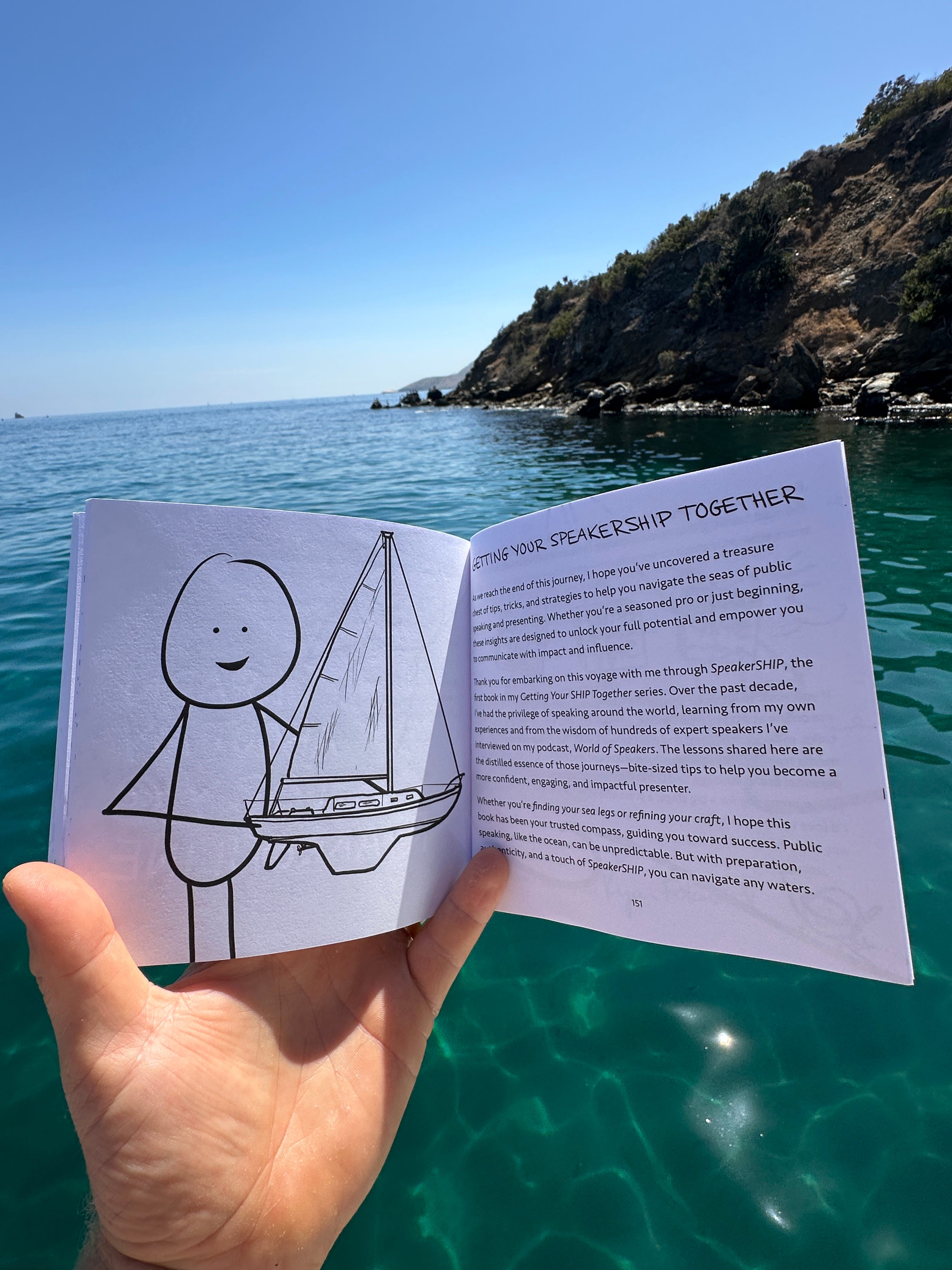
It was just the input, repeated long enough that it created its own outcome.
Pulling the One Lever You Have
So the framework runs both directions.
If you know exactly what outcome you want, reverse engineer the input goals that will get you there.
If you don’t know the outcome yet, you can still commit to an input, and let the consistency create momentum and output that eventually reveals an outcome you couldn’t have planned for.
Either way, outcome is the destination, output is the evidence you’re moving, input is the only lever you actually get to pull.
Pull it daily, and shipshape stops being a metaphor and starts being a habit.
And my mom’s boat?
Still working the input goals to get it fixed.