

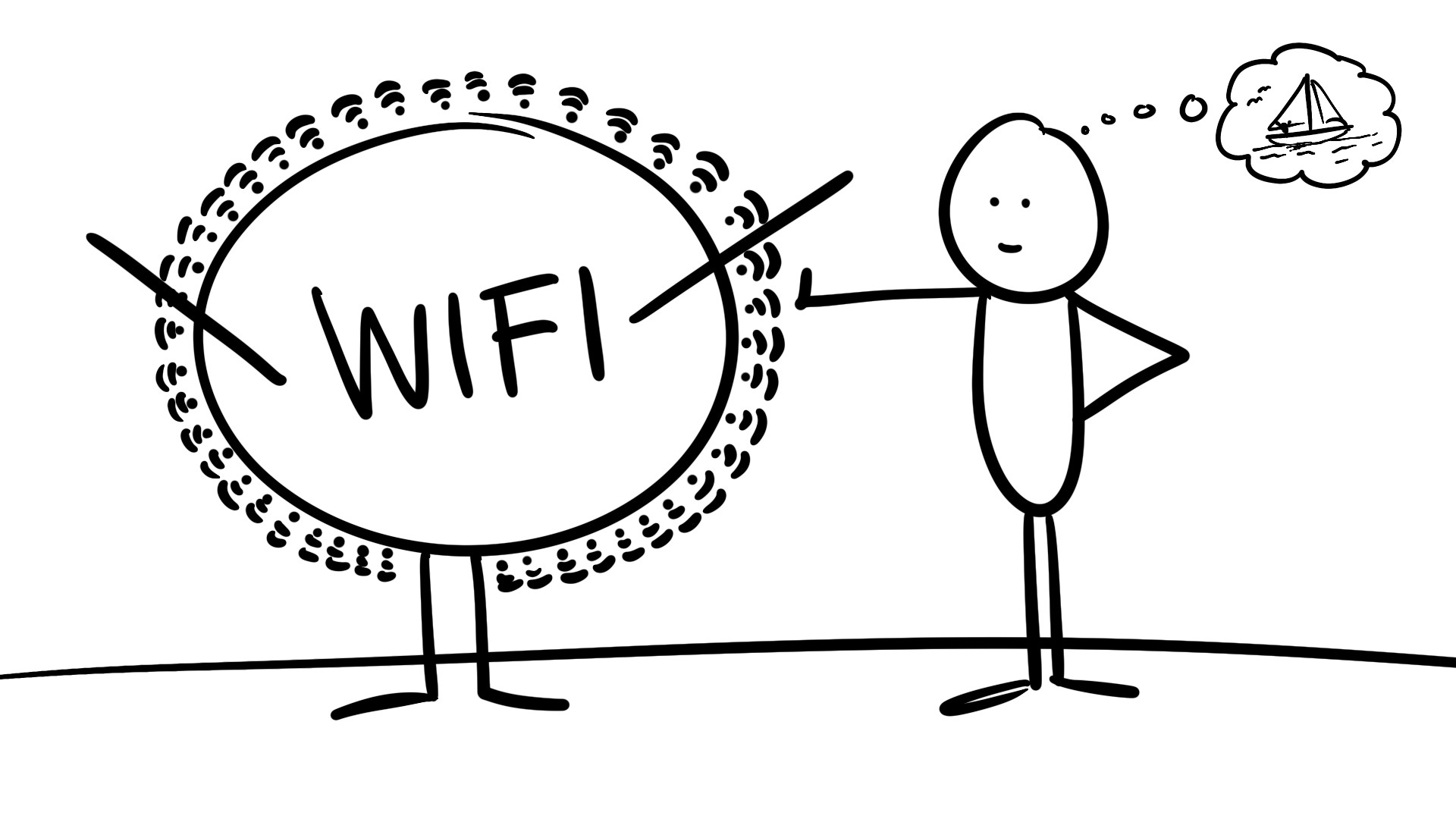
Cynthia and I took a few days off around Labor Day weekend for some much needed island time, a long weekend with nowhere to be and nothing but water between us and it.
We sailed to Catalina on BINGO, our 1977 Cal 34, and it was an awesome crossing.
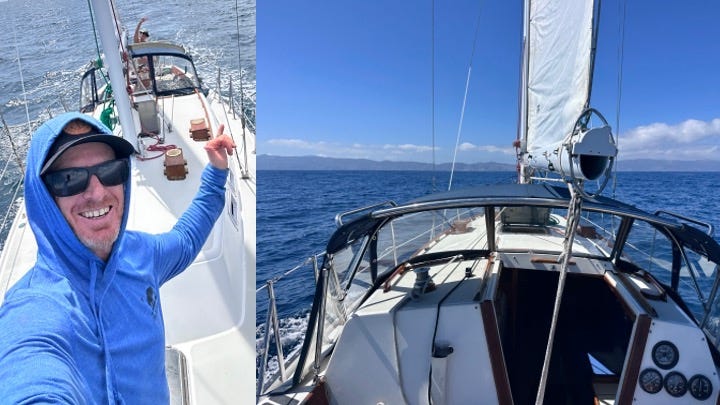
Every so often, when the light hit the sails just right or something caught my eye, I’d grab my phone and take a photo or a video. A pod of dolphins came by at one point and I answered them in my best dolphin, a string of high pitched squeaks that probably meant nothing to them and everything to me.
We anchored in our favorite spot, Big Geiger Cove, on the west end of the island. It’s home to our sailing club, Blue Water Cruising Club, and it has no moorings. Just sand, like it’s been for centuries.
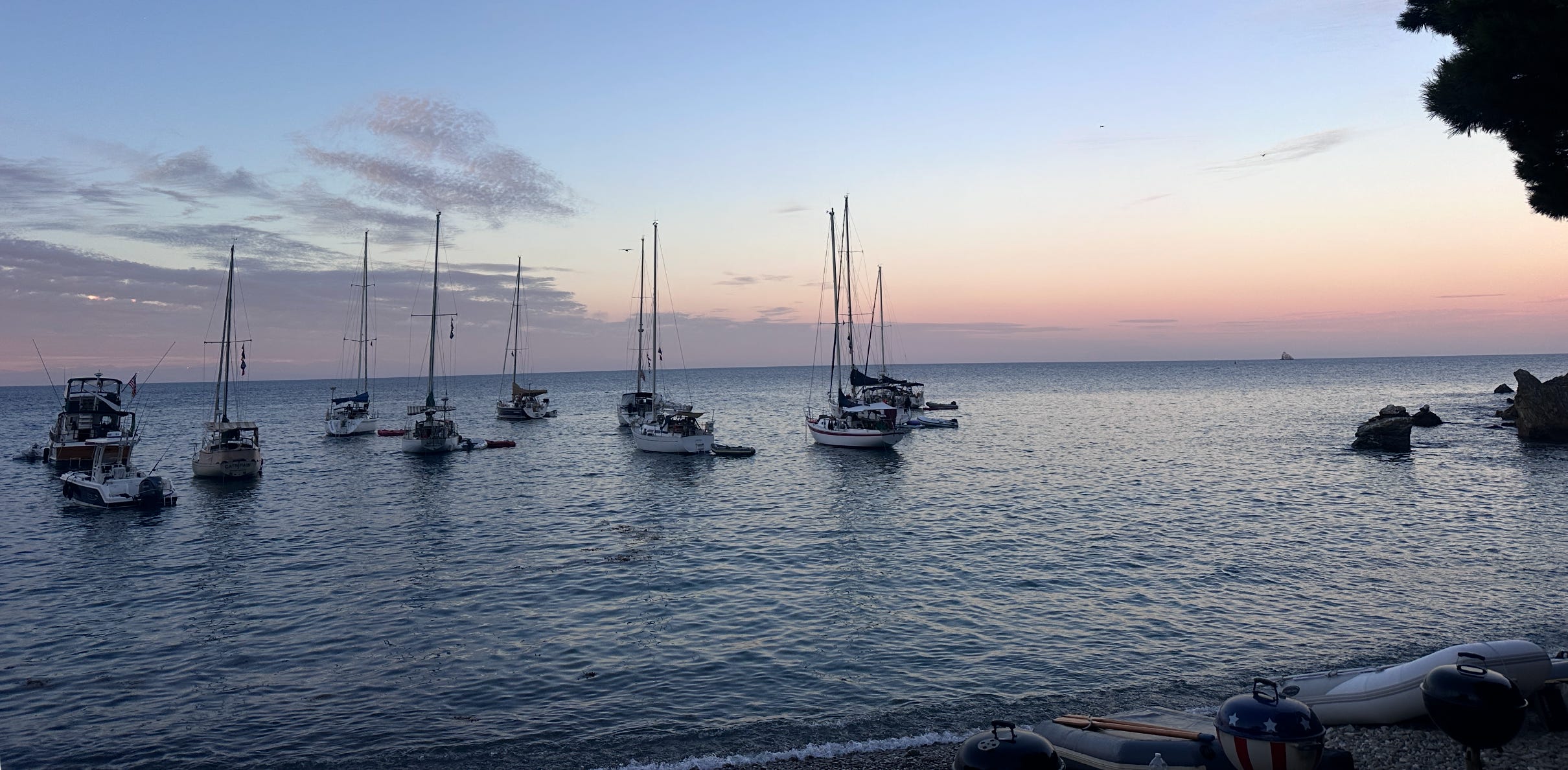
You get to pick your spot, throw out two anchors, one off the bow and one off the stern. Multiple boats anchor around the cove and dance together as the wind shifts, all moving together, all staying connected to the sand. It’s a delicate dance, and it’s magical to be there, literally connected to the sea floor.
Once BINGO was settled and everything was stowed, I sat back in the cockpit, looking at the rocky beach, listening to the water.
I pulled out my phone and started going through the day’s photos. Then I opened Instagram, picked my favorites, added some captions and a little music, and went to post.
Nothing loaded.
That’s when I realized the Wi-Fi I’d been riding off my mom’s boat, anchored nearby, was gone. She runs a Starlink setup and shuts it off before bed. Tonight she’d gone to bed early.
Fine, I thought. I’ll post in the morning.
Morning came the way it always does out there. I was up early for sunrise photos, which I never get tired of taking. The cove still asleep. Birds starting to move. The water flat and waiting. The orange light climbing and changing the color of everything it touched.
I went back down for a bit, made coffee, and settled into my spot in the cockpit to finish what I’d started the night before.
The signal was there but too weak to push anything through, just far enough from my mom’s boat to make uploading more trouble than it was worth.
And in that small gap of friction, a question showed up uninvited.
Why do I even need to post these?
I was anchored in one of the most beautiful coves in Southern California. Nobody was waiting on my stories.
So I put my phone on airplane mode. Just like that it turned into a camera and a clock, nothing else. Still documenting, still capturing the trip, just not sharing any of it. Not yet. Maybe not at all.
Seventy Two Hours of Nothing
I didn’t check email. I didn’t check texts. No searching for used foil gear on Whatsaap or Facebook Marketplace. No Instagram scrolling. No Twitter. No checking in on LinkedIn.
I visited my mom’s boat a few times over the next three days and had Wi-Fi sitting right there, and I chose not to use it.
It’s one thing to lose signal in a dead zone where you have no choice. This was different. I had to actively keep choosing airplane mode, over and over, for three days.
At first it was hard. There’s a specific itch that comes from knowing a connection exists and deciding not to take it.
But somewhere in there the itch faded and something better replaced it.
I read a book that would have otherwise just stayed on my shelf. I spent real, unhurried time with Cynthia. I got out on the foil board more than I normally would have, because there was nothing pulling my attention back to a screen connected to WiFi.

By the second day, the disconnection stopped feeling like deprivation.
It felt like room.
There’s a reason that room matters. Researchers Rachel and Stephen Kaplan developed something called Attention Restoration Theory, the idea that natural environments let your directed attention, the effortful, deliberate kind you use to answer emails and make decisions, actually recover. Screens and notifications ask for that same attention constantly. Open water doesn’t ask for anything.
A more recent review in the journal Frontiers in Human Dynamics backs this up on the digital detox side specifically. Stepping away from devices measurably improves attention, reduces stress, and increases self reflection.
I didn’t need a study to tell me that while I was out there. But it’s nice to know my nervous system wasn’t just being dramatic.
The Trip Home
Tuesday, sailing home, we hit weather crossing the channel. Lightning showed up around us on open water, not exactly comforting with a forty foot aluminum mast standing straight up out of the middle of our boat.
I turned my phone off airplane mode, asked searched up the actual protocol is for a sailboat near lightning, and we got our life jackets out and staged the fire extinguisher just in case.
We made it home fine.
What stuck with me wasn’t the lightning. It was that when I finally reconnected, it was for something real. The tool went back to being a tool.
What This Reminded Me About Leadership
Back home, I kept thinking about why those three days felt different than other times I’ve tried to unplug. A few lessons kept surfacing.
1. Disconnecting from everyone helps you reconnect with yourself.
The itch to check in faded by day two, and what replaced it was space I didn’t know I needed. A book I’d been meaning to read. Real conversation with Cynthia. As a leader, you can’t hear your own thinking if you never stop listening to everyone else’s.
2. Most of what feels urgent isn’t.
Twenty three texts and a stack of emails survived three days without me just fine. I got through all of it within that first afternoon back. Being reachable at all hours gets mistaken for being responsible. They are not the same thing.
3. Availability is not the same as effectiveness.
The work does not stop needing you just because you stopped checking on it. It waits. Most of it waits fine, and it will still be there when you get back.
4. Checking your phone compulsively is anxiety wearing a productivity costume.
It doesn’t make you a better leader. It just makes you a tired one.
5. The real skill is knowing what deserves your attention when it shows up.
Not staying offline forever. Not being reachable every second either. Knowing the difference, and trusting yourself to act the moment something actually needs you, the way I did the moment I saw lightning on the water.
When I find myself reaching for my phone too much these days, I think back to being on airplane mode on BINGO, with no Wi-Fi to reach for even if I wanted it.
It helps me ask the same question I asked myself in that cove. Can this wait? Usually it can.
I love being available, especially as a leader.
But those seventy two hours reminded me that I am the captain of my phone. Just because Wi-Fi is available doesn’t mean I have to be connected every moment.